




A good HVAC company name has to do more than sound professional. Customers need to remember it, say it, spell it, recognize it on a truck, and find the right business when they search for it.
Below are more than 250 HVAC company name ideas organized by style, followed by the practical checks you should run before putting one on a truck, registering a domain, or building a Google Business Profile. They’re meant to give you directions to explore, not names you can assume are available.
We screened this list to remove obvious national and large HVAC brands and exact-match conflicts that surfaced in broad web searches. That is not a trademark clearance check, state registration check, domain check, or a search of every local HVAC company in the country.
Before you register, print, wrap, or advertise any name from this list, read the Check These Before You Commit section.
Family and Founder Names
Founder-style names can make a company feel local and accountable. It can also become less flexible if you later sell the business, merge with another contractor, or want the brand to feel larger than a single owner. If you use this direction, substitute your own surname and then run the same availability checks you would for any other brand.
- Alden Heating & Air
- Bramwell Heating & Cooling
- Carroway Comfort Systems
- Dunley HVAC Services
- Ellison Climate Co.
- Fairmont Heating & Air
- Granger Comfort Systems
- Hollis Heating & Cooling
- Ingram Climate Services
- Kendrick Heating & Air
- Langford Comfort Co.
- Merritt HVAC Services
- Norwood Heating & Cooling
- Prescott Climate Co.
- Quincy Heating & Air
- Redmond Comfort Systems
- Stanton HVAC Services
- Thayer Heating & Cooling
- Vaughn Climate Services
- Westcott Heating & Air
- Yates Comfort Systems
- Briar Heating & Cooling
- Caldwell Climate Co.
- Dunham Heating & Air
- Everett Comfort Systems
- Garrison HVAC Services
- Hadley Heating & Cooling
- Keaton Climate Services
- Larkin Heating & Air
- Monroe Comfort Systems
- Pritchard Heating & Cooling
- Winslow HVAC Services
Geographic and Service-Area HVAC Name Ideas
Geographic names can signal local roots without necessarily locking the business to one city. The tradeoff is future reach. A geographic reference that fits a two-county service area today may feel restrictive if your company eventually expands across a state or region. These examples use regional and landscape language rather than specific city names.
- Copper Ridge Heating & Air
- Cedar Valley Comfort Systems
- Pine Harbor Heating & Cooling
- Stone Creek HVAC
- Riverstone Climate Services
- Oak Ridge Comfort Co.
- Bluewater Heating & Air
- Meadow Ridge HVAC Services
- Red River Heating & Cooling
- Silver Lake Comfort Systems
- Cypress Valley Climate Co.
- Highland Creek Heating & Air
- Maple Ridge Comfort Services
- Ironwood HVAC
- Clearwater Heating & Cooling
- Timberline Comfort Systems
- Grand River Climate Services
- Cedar Grove Heating & Air
- Willow Creek HVAC Services
- North Ridge Heating & Cooling
- South Shore Comfort Co.
- West Valley Climate Systems
- East River Heating & Air
- Harbor Point HVAC
- Lakeview Comfort Services
- Pinecrest Heating & Cooling
- Brookside Climate Co.
- Ridgeway Heating & Air
- Valley Forge Comfort Systems
- Twin Oaks HVAC Services
- Spring Creek Heating & Cooling
- Crescent Bay Comfort Co.
Comfort and Climate Names
These HVAC business name ideas focus on the customer outcome rather than the equipment. This direction can leave more room for future services than a name built exclusively around air conditioning, furnaces, or repair.
- TrueComfort Heating & Air
- EvenTemp HVAC
- ClimateWise Heating & Cooling
- ComfortFirst Air
- SteadyTemp HVAC
- AllSeasons Comfort
- Comfort Zone HVAC
- PerfectTemp Air
- WarmCore Heating
- CoolBreeze HVAC
- ClearAir Comfort Systems
- TrueTemp Heating & Cooling
- EasyComfort HVAC
- HomeClimate Co.
- BalancedAir Heating
- ComfortWorks HVAC
- SteadyState Comfort
- PureAir Heating & Cooling
- TempRight HVAC
- ClimateCraft Comfort
- GentleBreeze Heating & Air
- ComfortEdge HVAC
- TrueAir Heating
- WarmHearth Comfort
- CoolCurrent HVAC
- AirEase Heating & Cooling
- ComfortLine HVAC
- SmartTemp Air
- ClimateGuard Heating
- ComfortPath HVAC
- EvenAir Heating & Cooling
- WellTemp Comfort
- HomeBalance HVAC
- ClimateHome Heating & Air
- ComfortReach HVAC
Premium and Established Names
These names are intended to suggest permanence, scale, craftsmanship, or an established market position. Words such as “premium,” “elite,” and “best” are easy to generate and difficult to own. A more specific image or idea usually gives the brand more character.
- Heritage Heating & Air
- Cornerstone HVAC
- Sterling Comfort Systems
- Landmark Heating & Cooling
- Prestige Air
- Summit Heating & Air
- Legacy HVAC
- Kingsley Comfort
- Regency Heating & Cooling
- Elite Air Services
- Crown HVAC
- Meridian Comfort Systems
- Vanguard Heating & Air
- Beacon HVAC
- Provident Comfort
- Anchor Heating & Cooling
- Monarch Air
- Empire HVAC Services
- Trustline Heating & Air
- Pinnacle Comfort Systems
- Keystone HVAC
- Diamond Heating & Cooling
- Continental Comfort
- Sovereign Air
- Distinction HVAC
- Bellwether Heating & Air
- Statehouse Comfort Co.
- Vantage HVAC
- Foundation Heating & Cooling
- Premier Comfort Systems
Modern and Short Names
Short names can be easier to scale across a website header, a mobile ad, a uniform, a yard sign, and a fleet vehicle. They also need closer screening because a short coined word may already be used outside HVAC. Say a short name before you show it to someone. If the listener cannot spell it correctly, that friction will follow the company into radio, referrals, voice search, and branded searches.
- Nova Air
- Flux HVAC
- Halcyon Heating & Air
- Cove Comfort
- Fernwood HVAC
- Loom Heating & Air
- Halo Comfort
- Vane HVAC
- Aro Heating & Cooling
- Clima Co.
- Tempo HVAC
- Coolwave HVAC
- Airbase Home Services
- Chill Co. HVAC
- Brisk Air
- Freshline HVAC
- Skyline Air Co.
- Northstar HVAC
- Bluewave Comfort
- Driftwood Heating & Air
- Solace HVAC
- Kindle Home Comfort
- Verve Air
- Lumen HVAC
- Origin Heating & Cooling
- Current Home Comfort
- Arc Air Co.
- Drift HVAC
- Ember Heating & Air
- Wells Air Co.

Trade-Signal Names
These names make the service category clearer while still giving the brand a distinct lead word or phrase. The advantage is immediate clarity. The risk is becoming so descriptive that the name is hard to distinguish from other contractors. Search the full phrase, not just the lead word.
- Precision Heating & Air
- Certified Comfort Systems
- ProAir HVAC
- MasterTouch Heating & Cooling
- CodeRight HVAC
- TrueTrade Comfort
- Journeyman Air
- Licensed Comfort Co.
- ExactTemp HVAC
- Craftsman Heating & Air
- ProGrade HVAC
- Skilled Hands Comfort
- TechFirst HVAC
- StandardBearer Heating & Air
- CertaComfort HVAC
- ExpertAir Heating & Cooling
- PrecisionTemp HVAC
- TradeCraft Comfort
- QualityFirst HVAC
- BondedAir Heating & Cooling
- InspectRight HVAC
- GuildAir Comfort
- CertifiedTemp HVAC
- TrueCraft Heating & Air
- RatedRight HVAC
- StandardAir Comfort
- VerifiedTemp HVAC
- ProTrade Heating & Air
- SkillsetAir HVAC
- UnionGrade Comfort
Air Conditioning Company Names
If cooling is the dominant service in the market, these air conditioning company names put that specialty directly into the brand. An AC-focused name can fit a warm-weather market well. It can also become restrictive if heating, indoor air quality, plumbing, electrical, or other services later become major revenue lines.
- CoolPoint Air Conditioning
- Arctic Breeze AC
- Frostline Air Conditioning
- ChillFactor AC Services
- Polar Air Conditioning Co.
- CoolCurrent AC
- Subzero Home Cooling
- IceBridge Air Conditioning
- Frosty Peak AC
- CoolNest Air Conditioning
- Glacier Air Conditioning
- CoolCore AC Services
- Breezeline Air Conditioning
- ChillHouse AC
- Frostbyte Cooling Co.
- CoolSprings Air Conditioning
- Northwind AC Services
- Arctic Fox Air Conditioning
- CoolHarbor AC
- Snowline Air Conditioning
- FreshChill AC Co.
- CoolCrest Air Conditioning
- Everfrost AC Services
- Windward Air Conditioning
- CoolWorks AC
- Alpine Breeze Air Conditioning
- ChillPoint AC Co.
- FreezeFrame Cooling
- CoolStream Air Conditioning
- Iceberg AC Services
- Coldwater Air Conditioning
- CoolSide AC
- Frostgate Air Conditioning
- ChillWorks AC Co.
- CoolAnchor Air Conditioning
- WinterGreen AC Services
- CoolField Air Conditioning
- Snowcap AC Co.
- Brightfrost Air Conditioning
- CoolGauge AC Services
Heating and Cooling Company Names
These heating and cooling company names communicate both sides of the core trade without relying on the HVAC acronym.
- Fourway Heating and Cooling
- Comfort Circuit Heating and Cooling
- WarmCool Heating and Cooling
- AllTemp Heating and Cooling
- BalancedClimate Heating and Cooling
- EvenKeel Heating and Cooling
- Twin Season Heating and Cooling
- FullCircle Heating and Cooling
- Steadyline Heating and Cooling
- Homebound Heating and Cooling
- TrueNorth Heating and Cooling
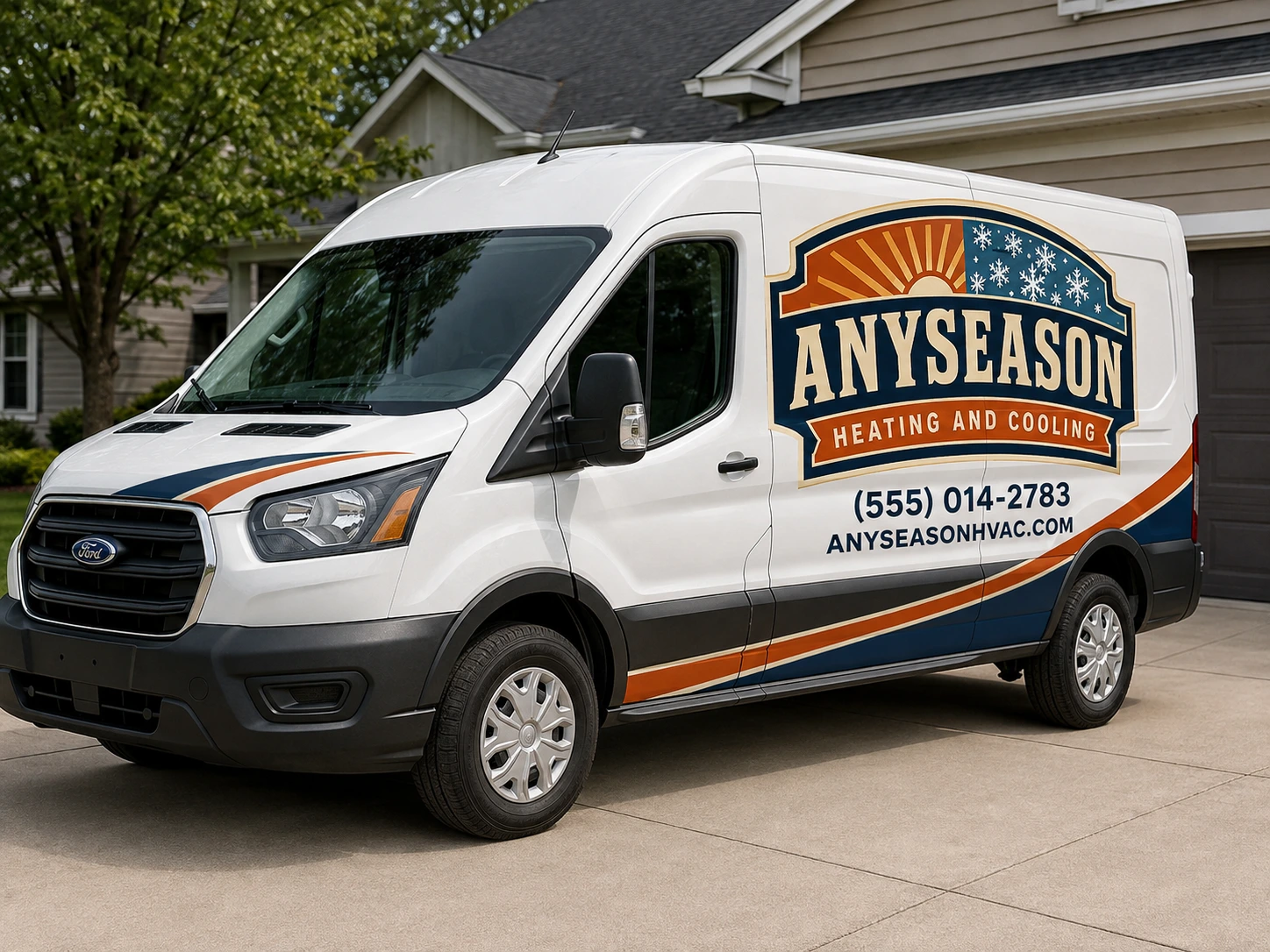
- Anyseason Heating and Cooling
- ClimateBridge Heating and Cooling
- WarmChill Heating and Cooling
- Coreheat Heating and Cooling
- Dualtemp Heating and Cooling
- HearthAndHome Heating and Cooling
- FullSpectrum Heating and Cooling
- Constant Comfort Heating and Cooling
- FourSeason Home Heating and Cooling
- Balanced Home Heating and Cooling
- Steadfast Heating and Cooling
- Yearround Heating and Cooling
- Homeflow Heating and Cooling
- Trueclimate Heating and Cooling
- Northgate Heating and Cooling
- Comfortwell Heating and Cooling
- Firstlight Heating and Cooling
- Homefront Heating and Cooling
- Steadyclimate Heating and Cooling
- Milestone Heating and Cooling
- Homehearth Heating and Cooling
- Wellrounded Heating and Cooling
- Anchorpoint Heating and Cooling
- Kindred Heating and Cooling
- Homewell Heating and Cooling
- Trustpoint Heating and Cooling
- Fairwind Heating and Cooling
- Homestead Heating and Cooling
- Steadyhome Heating and Cooling
What Makes an HVAC Company Name Work
A name that works commercially does a few unglamorous things well before it does anything clever.
Easy to Say, Hear, and Spell
Say it out loud to someone who’s never seen it written, and have them try to type what they heard. If “Air” versus “Aire” versus some invented spelling needs constant explaining, that’s friction showing up in every referral, every radio spot, and every voice search. Distinctive is useful. Confusing is expensive.
Works on a Fleet Vehicle
A name that fits fine on incorporation paperwork can still fail on the side of a moving van. Long names need smaller type or more lines, which leaves less room for the phone number and service category that actually need to be legible from the road. Before committing, put the name in plain bold type on a simple vehicle mockup and shrink it. If the name disappears before the truck does, it’s too long.
Signals What the Company Is
A surname, a place name, a coined modern name, and a descriptive trade name each create a different impression: one local and owner-led, another larger or more technical, another where the service is obvious on sight. There’s no universally better style, only the one that fits the company being built.
Leaves Room to Grow
“Springfield AC Repair” is specific at launch and a problem the moment the company adds heating, plumbing, or electrical, or expands past Springfield. No name anticipates every acquisition or service-line expansion, but it doesn’t have to build in its own ceiling either.
Skip the Alphabetical-Order Game
Names starting with AAA, A1, or a string of A’s used to buy a real directory advantage. That advantage barely exists anymore, and it was always a poor foundation for a brand. Homeowners find HVAC companies through Google, Maps, ads, referrals, reviews, social media, direct mail, and trucks now, not a phone book listing. Memorability and differentiation do more work than where a name lands alphabetically.
Check These Before You Commit
The list of HVAC name ideas we provided is brainstorming material. Don’t treat inclusion in it as evidence that a name is legally available or safe to use commercially. Availability is market-specific, and trademark conflicts can involve names that are similar rather than identical.
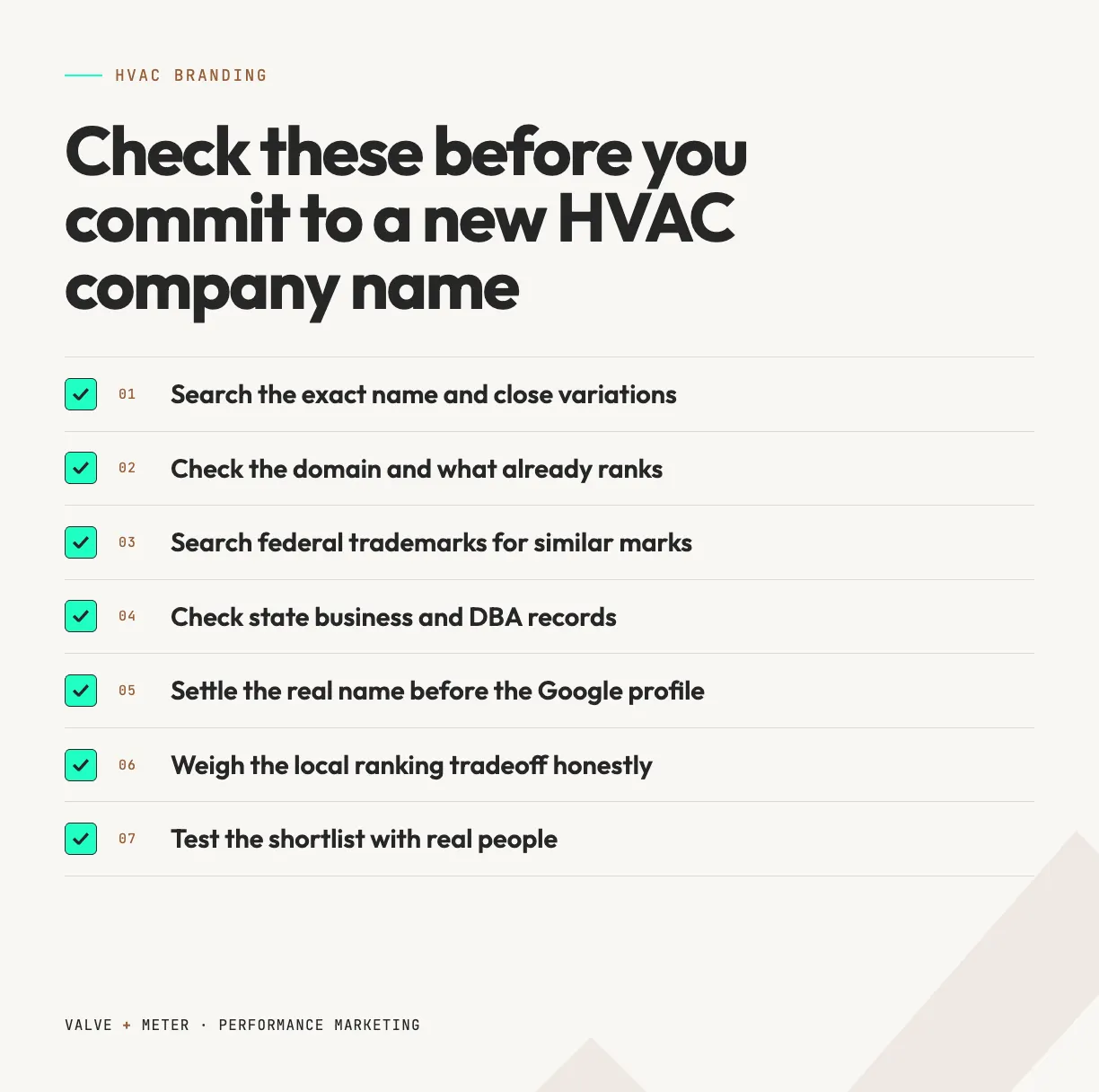
Run these checks before registering the business, buying signage, wrapping vehicles, launching a website, or building reviews around the name.
Search the Exact Name and Close Variations
Start with a broad web search and Google Maps. Search the exact name in quotation marks, then drop the quotation marks and add terms like HVAC, heating and cooling, heating and air, air conditioning, your city, nearby cities, and your state. Don’t stop at an exact match; two contractor names can differ on paper and still be close enough to confuse customers. Check neighboring markets too. HVAC service areas overlap, and a contractor 30 miles away may already advertise in the territory you plan to serve.
Check the Domain and What Already Ranks for the Name
Check the obvious .com plus reasonable variations. ICANN’s Registration Data Lookup Tool shows whether a domain is registered. In addition to checking domain availability, search the proposed name and see what Google already associates with it. If the .com belongs to an established home services company, or the search results are dominated by another HVAC contractor with a similar name, that’s a stronger warning sign than an unavailable domain on its own.
Search Federal Trademarks and Consider Professional Clearance
USPTO recommends searching for similar marks, not just identical ones; likelihood of confusion can arise when marks look alike, sound alike, mean similar things, or create a similar commercial impression for related services.
Use USPTO’s trademark search tools as part of the screening process. For a name you intend to invest heavily in, especially one that might expand across states, a trademark attorney can run a more complete clearance search. Registering an LLC, getting a DBA, or finding an available domain doesn’t establish that a trademark is clear.
Check State Business Records
Search the Secretary of State or equivalent database for the state where the company will be formed, and check the requirements for legal entity names, assumed names, and DBAs. A state accepting an entity name doesn’t mean the trademark is clear, or that a similar HVAC brand isn’t already operating nearby. Treat it as one separate checkpoint, not a final answer.
Decide the Real Business Name Before Building Your Google Business Profile
Google requires a Business Profile name to reflect your company’s real-world name, the one used consistently on the storefront, website, stationery, and by customers. Google doesn’t allow adding services, products, locations, or other keywords to the profile name unless they’re actually part of the business name. “Baxter Comfort” can’t become “Baxter Comfort HVAC Repair AC Installation Myrtle Beach” on the profile. If “Heating & Air” belongs in the Google Business Profile name, make it part of the real brand instead of adding it later for search visibility.
Understand the Local Ranking Tradeoff
Google doesn’t publish a formula promising higher rankings for HVAC keywords in a company name, but independent research does show a real correlation: Whitespark’s 2026 Local Search Ranking Factors survey lists keywords in the business name among the leading Google Business Profile signals. That draws a real distinction.
Choosing a descriptive name like “Baxter Heating & Air” is a branding decision. Changing only the Google Business Profile name to something like “Baxter Heating & Air AC Repair Indianapolis,” when that isn’t the real name, is keyword stuffing and breaks Google’s guidelines.
Don’t build an awkward name solely around SEO, but when two strong options are otherwise even, whether the name clearly communicates the trade is a reasonable tiebreaker. It’s also why naming belongs in the early stages of a local SEO strategy, not bolted on after the website, listings, and reviews already exist.
Test the Shortlist with Real People
Once there are three to five serious candidates, stop brainstorming and start testing. Say each name aloud and have someone spell it. Show it briefly and ask what they remember. Put it on a rough van mockup. Search it on a phone. Ask what size and type of company the name suggests. The goal is finding problems while they’re still cheap to fix.
HVAC Slogans and Taglines
Your company name does not have to communicate every benefit. That is one job a tagline can perform.
An established surname may carry local recognition while the tagline communicates an on-time promise, service philosophy, or other differentiator. A coined name may need a trade descriptor or tagline to make the company’s purpose immediately clear.
Avoid using the tagline to stack generic claims beneath a generic name. “Quality You Can Trust,” “Your Comfort Is Our Priority,” and similar lines could belong to nearly any contractor.
A more useful HVAC slogan should be:
- Easy to understand quickly
- Relevant to something the customer values
- Credible enough for the company to deliver consistently
- Short enough to work on a van, ad, or radio spot
- Specific enough that a competitor cannot simply replace your name with theirs
Our guide to HVAC branding and rebranding looks more closely at how names, messaging, slogans, visual identity, and fleet graphics work together.
When to Change an Existing Name
Naming a startup is inexpensive compared with renaming an established contractor. An existing HVAC name can carry branded search demand, reviews, referral recognition, domain authority, vehicle visibility, customer records, and years of reputation attached to it. Don’t discard that equity just because the identity looks dated. A name change becomes more reasonable when the name itself creates an actual business problem, not just when a newer competitor has a catchier one.
An Acquisition or Merger Creates Two Identities
When two HVAC businesses become one operationally, but customers keep seeing different names, websites, vehicles, and Google Business Profiles, that fragmentation creates real confusion. Valve+Meter ran into exactly this: consolidating two Fort Wayne HVAC companies under the Sheets Heating & Cooling identity. The work covered the brand, the website migration, SEO, and the Google Business Profile consolidation, not just a new logo layered on top.
The Geography No Longer Fits the Business
A city-based name can carry strong local equity and still turn restrictive once a contractor expands into multiple markets. Before changing it, weigh what the existing name is actually worth; geographic specificity isn’t automatically a problem if customers outside that geography already recognize and choose the brand.
Customers Keep Confusing the Company With a Competitor
Persistent name confusion shows up in referrals, branded searches, reviews, and wasted ad spend. If customers keep calling or reviewing the wrong company, keeping the existing name can eventually cost more than changing it.
Frequently Asked Questions
Should my DBA and legal business name be the same?
Not necessarily. Depending on state and local requirements, a company can operate under a DBA or assumed name that differs from its legal entity name. Whatever the customer-facing name is, use it consistently everywhere. Google also requires the Business Profile name to reflect the business’s real-world name, not an SEO-enhanced variation of it. Check the specific DBA requirements in your state before registering.
Should I use my last name for my HVAC company?
It can work well when the founder already has a reputation in the community, or when a family-business identity supports the position the company wants. Weigh how easy the surname is to pronounce and spell, whether it communicates the trade clearly enough on its own, and how it would work if the company was eventually sold. Adding “Heating & Air,” “Heating & Cooling,” or another real descriptor can make the service category clear without losing the surname.
Should I include my city or region in the name?
Only if the location is likely to stay relevant to the business. A city name can signal strong local roots, but it can also make expansion into nearby markets feel awkward later. A regional or non-geographic name leaves more room if expansion is part of the plan. Either way, don’t add a city to just the Google Business Profile if it isn’t part of the actual business name; Google’s guidelines require the profile to match the real-world name.
Choose a Name You Can Build On
A company name gets more expensive to change the more successful the company becomes.
Use a list like ours to generate directions, not to skip the due diligence. Narrow the field first on memorability, pronunciation, fleet legibility, positioning, and room to grow. Then run it through the checks: Search the market, check the domains, review state records, search for conflicting trademarks, and think through how the real name performs in local search.
If you’re preparing to launch or rename an HVAC company, Valve+Meter can help evaluate the search environment and the marketing implications before you invest in the rest of the brand. Request a marketing assessment, no pressure to sign anything this year.