




Modern browsers don’t allow connections to non-secure websites. This is a critical problem for search engine optimization and your contractor website’s credibility.
Non-secure connections are vulnerable to security threats and can be intercepted by malicious actors. When homeowners see a “Not Secure” warning, they leave your site immediately.
As far back as 2014, Google made it clear that SSL and HTTPS were ranking factors. In 2018, Google began marking all non-secure HTTP websites as “Not Secure” in the URL bar of Google Chrome. Today, every major browser requires HTTPS.
HTTPS is a secure version of HTTP that encrypts data sent between your website and a user’s browser. The primary goal is making it harder for hackers to intercept sensitive information like phone numbers, addresses, and job details homeowners submit.
An HTTP website is a clear signal to search engines that you’re not paying attention to security or best practices. All search ranking algorithms pay attention when you’re not paying attention.
At this point, SSL certificates are mandatory for any website that wants to rank well in search engine results. When we complete an SEO Audit for contractor clients, having all components of your website under SSL is basic table stakes.
When multiple contractor websites compete for the same search terms, a site without an SSL certificate will always lose to updated, secure websites. Internet security is a ranking signal Google takes seriously.
The presence of HTTPS might be a ranking signal, or the absence of it might result in a penalty. Either way, HTTPS websites are here to stay.
What Is an SSL Certificate?
A Secure Sockets Layer certificate is a digital authentication for your website that encrypts sensitive information sent between your website and a user’s browser. It’s essential for any contractor website launching or being updated.
SSL certificates ensure the privacy and security of sensitive data like phone numbers, addresses, and personal information homeowners submit when requesting a quote or scheduling a service call.
You might ask why you need SSL encryption if you’re not collecting credit card information. Privacy is privacy in the eyes of Google, and security is their top priority.
Think of an SSL certificate like a padlock. When installed, it encrypts all data sent between your website and the user’s browser using a complex algorithm that makes it extremely difficult for hackers to intercept. This protects homeowners from identity theft, fraud, and other online security threats.
Contact forms on contractor websites should always be considered private, even if you’re not collecting financial data directly.
SSL certificates are issued by certificate authorities and bind your domain name, company name, and location, keeping hackers from stealing private information from your web server.
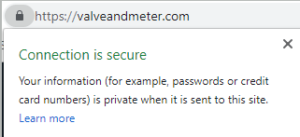
Google Chrome displays a padlock icon in the URL bar when an SSL certificate is installed:
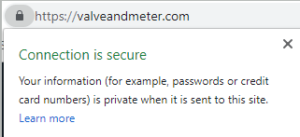
The certificate also includes a public key, used to encrypt data sent to the website, and a private key, used to decrypt the data once the website receives it. This changes your transfer protocol from HTTP to HTTPS and displays the padlock icon.
That’s what Google is looking for—HTTPS websites—and it won’t warn potential website visitors to reconsider visiting your site.
SSL certificates come in different types and levels of validation. Higher-level SSL certificates provide more extensive security features and are used for websites handling highly sensitive information. Many of these sites have moved beyond SSL certification to offer 2-factor authentication.
What Is the Secure Website Impact on Search Traffic?
If your site doesn’t have an SSL certificate, web visitors see a warning similar to this:
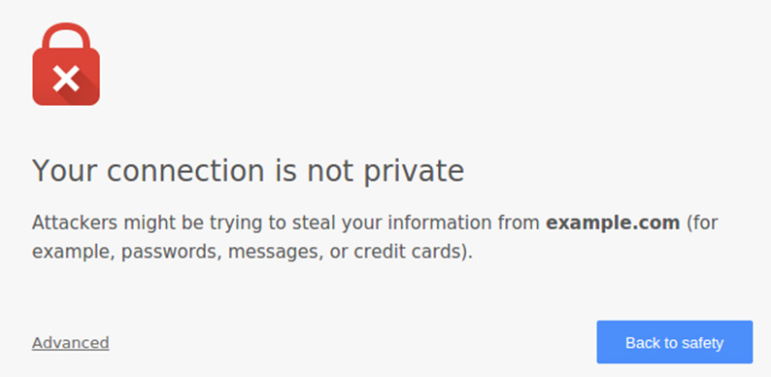
If they click “Back to Safety,” they never reach your website. You lose that lead. But there’s more bad news SEO and user experience.
Since 2014, Google’s Webmaster Guidelines have told SEO professionals that HTTPS is a key ranking factor in organic search. If your website isn’t secure, then search engines won’t reward you in rankings.
For contractors specifically, this means competitors with secure websites are outranking you for “emergency plumber near me,” “HVAC repair,” and other high-intent search terms.
What are the Different Types of SSL Certificates?
Not all SSL certificates are the same. The difference to choose what’s best for your website.
- Domain Validation Certificates: The most basic SSL certificate, a DV certificate, verifies that a domain name is owned by the requester.
- Organization Validation Certificate: This certificate requires additional information about your organization, like a physical address, contact information, and proof of existence.
- Extended Validation Certificate: Also known as an EV certificate, this type requires the most information and is used to verify the legitimacy of an organization.
- Wildcard SSL Certificate: This certificate can be used to establish a secure connection on multiple subdomains on a single domain.
SSLs are issued by Certificate authorities like Symantec, Comodo, and DigiCert. These organizations specialize in authenticating a website owner’s identity and ensuring that data sent between the website and its visitors are encrypted.
Search Engine Optimization Services
SEO Copywriting
SEO copywriting services are essential for contractors aiming to rank higher in search results. Website copy that speaks to homeowners’ pain points—”emergency service available,” “licensed and insured,” “same-day appointments”—attracts qualified leads. With 75% of purchases starting with a Google search, engaging audiences with compelling, SEO-optimized content is crucial.
SEO Audits
Valve+Meter’s SEO Audit Services offer a deep dive into your website’s performance. We identify the best strategies to enhance your Search Engine Optimization by evaluating content, structure, and technical elements. Our approach ensures your site ranks well, attracting high-quality leads. Experience a tailored strategy that focuses on both user experience and search engine visibility.
More About Our Audit Services >
SEO Services
Valve+Meter offers custom SEO services tailored to your contractor business. From content optimization to technical SEO, we focus on improving search engine rankings and driving qualified leads. Our approach includes analyzing your current strategy, optimizing website content, and building structures for long-term organic search success.
Does an SSL Certificate Expire?
SSL certificates aren’t permanent and must be renewed periodically to maintain website security. An SSL certificate is normally issued for one to two years, depending on the certificate authority. If an SSL certificate expires, your website will no longer have a secure connection, and visitors may see warnings that the website is not secure.
It is essential to renew SSL certificates before they expire to ensure continued website security. Most certificate authorities will send renewal reminders before the certificate expires. At Valve+Meter, we encourage website owners to set their own reminders and act proactively.
The renewed certificate will need to be installed on your website’s server. As these certificates have become commonplace, some website hosting providers offer automated certificate renewal services to simplify the process.
It is important to ensure that your certificates are configured correctly and that the website uses the most up-to-date encryption protocols. This helps prevent security vulnerabilities and keep the website secure.
Top One Million Sites Using HTTPS 92.2%
This is a significant increase from 2016, when only 54.7% of the top 1 million websites used HTTPS.
HTTPS and SSL Statistics
- The use of HTTPS is growing rapidly. In 2017, the use of HTTPS increased by 23%. In 2018, it increased by 27%. In 2019, it increased by 31%. By 2025, HTTPS adoption has become standard across all reputable websites.
- The use of HTTPS is not just limited to large websites. Small and medium-sized businesses have increasingly adopted HTTPS. In 2017, only 36% of small and medium-sized businesses used HTTPS. By 2024, that number exceeded 80%.
- There are many benefits to using HTTPS. HTTPS provides a secure connection between a website and a user’s browser. User data is protected from eavesdropping and tampering.
- HTTPS improves search engine rankings. Google gives preference to websites that use HTTPS, particularly in competitive local markets where trust signals matter most.
- HTTPS increases website traffic. Studies show that users are more likely to visit websites that use HTTPS. Homeowners specifically look for trust indicators before contacting a contractor.
- HTTPS is becoming the standard for secure websites. More websites are moving to HTTPS, and this trend continues to accelerate across all industries.
- If you don’t use HTTPS, you’re putting your users at risk. HTTPS provides a secure connection. If you don’t use HTTPS, you’re putting your users at risk and signaling to Google that security isn’t a priority.
- HTTPS is easy to set up. There are many free and easy-to-use tools available to help you set up HTTPS on your website.
- There’s no reason not to use HTTPS. HTTPS is free or inexpensive, easy to set up, and provides a secure connection for your users.
Are Secure Websites Protected From Hackers?
Even SSL has had incidents of data breaches as criminals work to break through security.
In 2014, a critical security vulnerability called Heartbleed was discovered in OpenSSL. This vulnerability allowed hackers to steal sensitive information from websites using OpenSSL to encrypt their data.
In 2017, another critical vulnerability called Cloudbleed was discovered in Cloudflare’s content delivery network. This vulnerability exposed passwords and private messages from millions of websites using Cloudflare’s services.
Your certificate shouldn’t assume complete security. Work to protect site users against hackers. Small business owners can use third-party plugins so you don’t need to collect or store personal information like credit card details.
Common HTTPS and SSL SEO Issues
Several common issues can arise when running HTTPS and SSL on your website:
- Mixed Content: This occurs when a secure page (HTTPS) contains insecure elements (HTTP), such as images, scripts, or stylesheets.
- Internal Links: Broken or incorrect internal links can negatively impact user experience and SEO.
- Redirects: Failing to redirect HTTP URLs to HTTPS can lead to duplicate content and indexing issues.
- Canonicalization: Incorrect canonical tags may cause search engines to index the wrong version of your website.
- Expired SSL Certificates: An expired SSL certificate will show your site as insecure, negatively affecting user trust and SEO.
How To Detect HTTPS And SSL Issues
To detect HTTPS and SSL issues, use a combination of tools and manual checks:
- SSL Server Test: Tools like Qualys SSL Labs can test your SSL configuration and identify potential issues.
- Website Crawlers: Crawlers like Screaming Frog can help identify mixed content, internal link issues, and canonicalization problems.
- Google Search Console: Use Google Search Console to detect indexing, crawl, and security issues.
How To Fix Mixed Content Issues
To fix mixed content issues:
- Identify insecure elements on your pages using website crawlers or browser developer tools.
- Update URLs for insecure elements to HTTPS.
- If third-party resources are causing mixed content issues, consider finding alternative secure resources or hosting the content on your server.
How To Update Internal Links
To update internal links:
- Use a website crawler to identify and list all internal HTTP links.
- Replace HTTP links with their HTTPS counterparts.
- Ensure all newly added content uses HTTPS links by default.
How To Redirect HTTP To HTTPS
To redirect HTTP URLs to HTTPS:
- Set up a 301 redirect for all HTTP URLs, ensuring that users and search engines are redirected to the secure HTTPS version.
- Use server configurations like .htaccess (Apache) or web.config (IIS) to set up site-wide HTTP to HTTPS redirects.
- Test redirects to ensure proper setup.
How To Resolve Canonicalization Issues
To resolve canonicalization issues:
- Ensure all canonical tags use the correct HTTPS version of your website.
- Update your sitemap to include only HTTPS URLs.
- Configure your Content Management System (CMS) to use HTTPS URLs for canonical tags automatically.
How To Manage And Renew SSL Certificates
To renew SSL certificates:
- Monitor your SSL certificate’s expiration date and set reminders to avoid expiration.
- Purchase and install a new SSL certificate from a trusted Certificate Authority before the current one expires.
- Verify the new SSL certificate’s installation and ensure there are no issues.
Why SEO Performance is Key to Growth
SEO is a competitive game for contractors. To win local search, someone else loses.
If you want to show up in Google search results and you haven’t adopted SSL or set up HTTPS on every single page of your website, you’re losing to competitors who have.
Having an SSL certificate and HTTPS on your website is crucial for data security and your search engine strategy. It signals to homeowners that you have a secure connection and gives Google a key ranking signal that your website is safe to browse.
SEO experts at Valve+Meter encourage our contractor clients to embrace internet best practices. For SEO purposes, you want your content to stand out for the right reasons.
When search engines crawl your site, the SSL certificate is one basic layer of SEO rankings. If you haven’t made the shift to HTTPS yet, Valve+Meter can help. Contact us today for a free analysis of your entire website.
The only way to grow your business is to shine a light on your digital marketing. Search engine results are the best way to put your brand in front of new prospects.